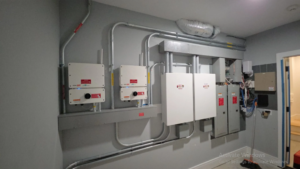
Commercial battery storage is becoming an increasingly important part of energy planning for businesses that want greater control over electricity costs, peak demand, operational resilience, and future energy needs. However, installing a commercial battery system is far more involved than simply selecting equipment and connecting it to an electrical panel.
A professional commercial battery storage installation in Newburgh, NY, requires careful analysis, engineering, permitting, utility coordination, equipment integration, testing, and commissioning. Understanding these steps can help business owners recognize what a properly managed project should look like and choose an experienced energy partner.
Here is what Newburgh businesses can generally expect throughout the commercial battery storage installation process.
Step 1: Initial Site and Energy Load Assessment
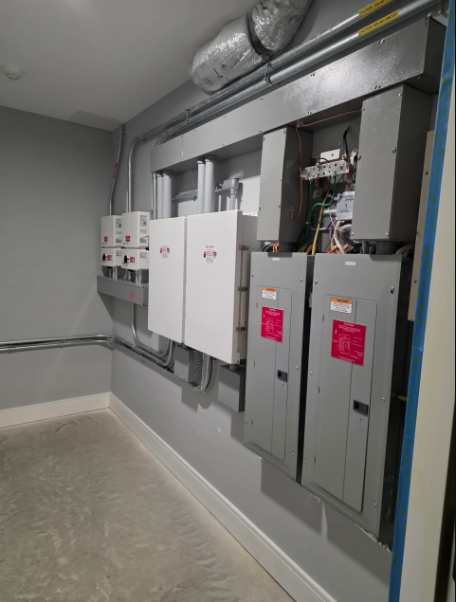
Every successful battery storage project should begin with the property rather than the battery itself.
An experienced installer will first examine how the facility currently consumes electricity. This may involve reviewing historical utility bills, interval data, peak demand periods, operating schedules, electrical infrastructure, available installation space, and future plans for the property.
Different businesses can have dramatically different energy profiles. A warehouse operating primarily during daytime hours will have different storage requirements than a manufacturing facility, retail centre, healthcare property, or operation running equipment around the clock.
The assessment helps determine what the battery actually needs to accomplish.
Potential goals for commercial battery storage in Newburgh, NY, may include:
- Reducing demand during peak periods
- Shifting electricity consumption to different times
- Supporting onsite renewable generation
- Providing backup power for selected critical loads
- Improving energy resilience
- Preparing a facility for future electrification
This stage is critical because battery capacity should be based on actual facility requirements rather than simply selecting the largest system available.
Step 2: System Sizing and Engineering
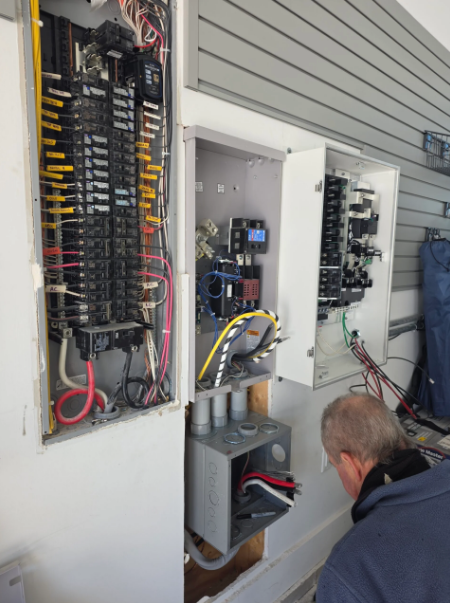
Once the site’s energy profile has been evaluated, engineers can begin designing the appropriate system.
Battery energy storage systems are typically described using two important measurements: power capacity, usually expressed in kilowatts or megawatts, and energy capacity, commonly expressed in kilowatt-hours or megawatt-hours.
Both must be carefully matched to the facility’s objectives.
For example, a system intended primarily for peak-demand management may require different sizing than one designed to support critical equipment during outages.
Engineering may also consider:
- Existing electrical service
- Switchgear and transformers
- Battery location and footprint
- Charging and discharging requirements
- Inverter specifications
- Protection equipment
- Control systems
- Ventilation or thermal management
- Fire and life-safety requirements
- Integration with solar or other distributed energy resources
New York requires energy storage installations to meet applicable electrical, building, fire, safety, utility, and local requirements. NYSERDA also notes that energy storage technologies undergo safety testing and must satisfy applicable permitting and inspection requirements before installation.
This engineering stage is one of the clearest differences between a specialized commercial battery storage company and a general contractor simply adding battery equipment to its services.
Step 3: Developing the Project Strategy
Engineering determines how the project can physically operate. Energy strategy determines how the system should be used.
A qualified installer should evaluate the financial and operational objectives behind the investment rather than treating battery storage as a standalone piece of equipment.
Depending on the facility, a commercial battery may charge during lower-demand periods and discharge when facility demand rises. Other projects may coordinate storage with onsite solar, critical loads, facility energy controls, or demand-response opportunities.
New York also maintains programs and value streams relating to commercial energy storage. NYSERDA currently provides resources covering retail storage, distributed-energy value streams, technical assistance, and commercial storage incentives subject to eligibility and program requirements.
Whether evaluating commercial BESS solutions in Albany, NY, or designing a system for a Newburgh property, the important point is that battery technology should support a measurable energy strategy.
Step 4: Permitting and Code Review
Commercial battery installations require considerably more coordination than many conventional electrical upgrades.
The specific approvals depend on system capacity, configuration, property characteristics, local requirements, and the authority having jurisdiction.
Project documentation may include electrical drawings, site plans, equipment specifications, structural information, fire-safety documentation, equipment certifications, emergency procedures, and system operating details.
New York’s Battery Energy Storage System Guidebook provides municipalities with detailed guidance covering BESS permitting, inspections, safety, and technical review. Local authorities still retain responsibility for reviewing and permitting individual projects.
An engineer-led installer should incorporate permitting requirements into the design process rather than discovering compliance problems after equipment has already been selected.
Step 5: Utility Interconnection
Utility coordination is another major part of a grid-connected battery project.
Newburgh is within Central Hudson Gas & Electric’s service territory.
Central Hudson follows New York’s Standardized Interconnection Requirements for qualifying distributed-generation systems of 5 MW AC and below, while larger projects may follow additional processes depending on their configuration.
The interconnection process can require technical documentation such as one-line diagrams, site plans, inverter information, equipment certifications, storage specifications, and proposed protection or control settings.
The utility may also evaluate how the proposed battery interacts with the local distribution system.
This is why utility interconnection should be considered during engineering rather than treated as administrative paperwork at the end of the project.
Businesses comparing a battery storage system installer with a contractor serving the Hudson Valley should look closely at interconnection experience.
An installer familiar with utility requirements can prepare designs around grid conditions from the beginning.
Step 6: Equipment Procurement and Site Preparation
After engineering, permitting, and project approvals have progressed sufficiently, the physical installation phase can begin.
Depending on the design, site preparation might involve foundations or equipment pads, conduit installation, trenching, electrical upgrades, protective equipment, fencing, bollards, communications infrastructure, transformers, switchgear, or modifications to existing electrical systems.
The battery equipment, inverters, control hardware, monitoring systems, and associated components must then be installed according to the engineered plans and manufacturer requirements.
For larger projects, careful project management becomes especially important because electrical contractors, engineers, equipment suppliers, utilities, inspectors, and facility representatives may all need to coordinate their schedules.
Step 7: System Integration and Controls
Installing the batteries is only part of the project.
Modern battery energy storage systems rely on sophisticated monitoring and controls to determine when batteries charge, discharge, remain idle, or respond to specific facility conditions.
The energy management system may be configured around factors such as facility demand, utility rates, backup-power priorities, solar production, operating schedules, and battery state of charge.
An engineer-led project should therefore consider not only whether the battery operates, but whether it operates according to the business objective established during the initial assessment.
Step 8: Testing, Inspection, and Commissioning
Before a commercial battery system enters full operation, it should go through commissioning.
Commissioning verifies that electrical equipment, safety systems, controls, communications, monitoring, and battery operating modes perform according to the approved design.
Depending on the project, this process may involve system inspections, functional testing, control verification, inverter testing, communications testing, emergency procedures, and utility requirements.
Once commissioning is complete, the business should also receive appropriate operating documentation and guidance explaining system monitoring, maintenance expectations, safety procedures, and equipment warranties.
How Long Does a Commercial Battery Storage Project Take?
There is no universal installation timeline.
A relatively straightforward commercial system may progress much faster than a complex facility requiring major electrical upgrades or utility infrastructure work.
Project duration can be affected by engineering complexity, equipment availability, permitting, utility review, interconnection studies, local inspection schedules, site improvements, and required electrical upgrades.
For this reason, responsible installers typically establish project milestones rather than promising unrealistic completion dates before engineering and utility requirements are understood.
Engineer-Led Installer vs. Generalist: Why the Difference Matters
Commercial energy storage is ultimately an engineering project.
A generalist contractor may focus primarily on installing equipment. An engineer-led energy company should begin with the facility’s load profile, electrical infrastructure, business objectives, safety requirements, utility environment, and long-term energy strategy.
That approach helps answer much more important questions:
Is the battery sized correctly?
How will it interact with the building’s electrical system?
What loads should it support?
How will charging and discharging be controlled?
What utility requirements could affect the project?
What upgrades are necessary before installation begins?
Those decisions ultimately determine whether a system simply functions or becomes a valuable part of the facility’s broader energy infrastructure.
A successful commercial battery storage installation in Newburgh, NY, starts long before batteries arrive onsite. It begins with careful energy analysis, engineering, system design, permitting strategy, utility coordination, and a clear understanding of how storage should support your facility.
BigEnergy USA are premier energy experts, delivering engineering-focused design, strategy, and installation across battery storage and advanced commercial energy systems.
Whether you are exploring commercial battery storage, evaluating commercial BESS solutions, or searching for an experienced battery storage system installer in Albany, NY, our team approaches every project with the engineering insight needed to design around your property’s actual energy requirements.
Talk with BigEnergy USA about your commercial battery storage goals and build a system designed around your facility, your electrical infrastructure, and the way your business uses energy.