
Pricing
Due to economies of scale, most home battery systems—particularly those using the leading lithium iron phosphate (LFP) chemistry—have generally reached a similar price point across all major brands.
- Lower-cost, niche, or DIY batteries exist but often lack certifications and long-term support.
- Installers need to stand behind solutions for 15–20 years to match the standard warranties offered on solar panels, making certified, commercial-grade battery systems the preferred and trusted choice.
- Choosing a vetted solution ensures reliability, safety, and ongoing service
How Much Does a Home Battery System Cost?
$1,000-1,500
per kWh
How Much Does a Battery System Really Cost?
The cost of a home battery system typically ranges from $1,000 to $1,500 per kilowatt-hour (kWh). This estimate encompasses equipment, installation, and permitting. For instance, a 15 kWh system would cost between $15,000 and $22,500 after incentives.
Federal and State incentives can significantly reduce costs. Take advantage of them before they are gone!
Great article to read on costs: https://www.cnet.com/home/energy-and-utilities/how-much-does-a-home-battery-cost/
- A Cost Comparison
Home Battery vs. Fuel Generator
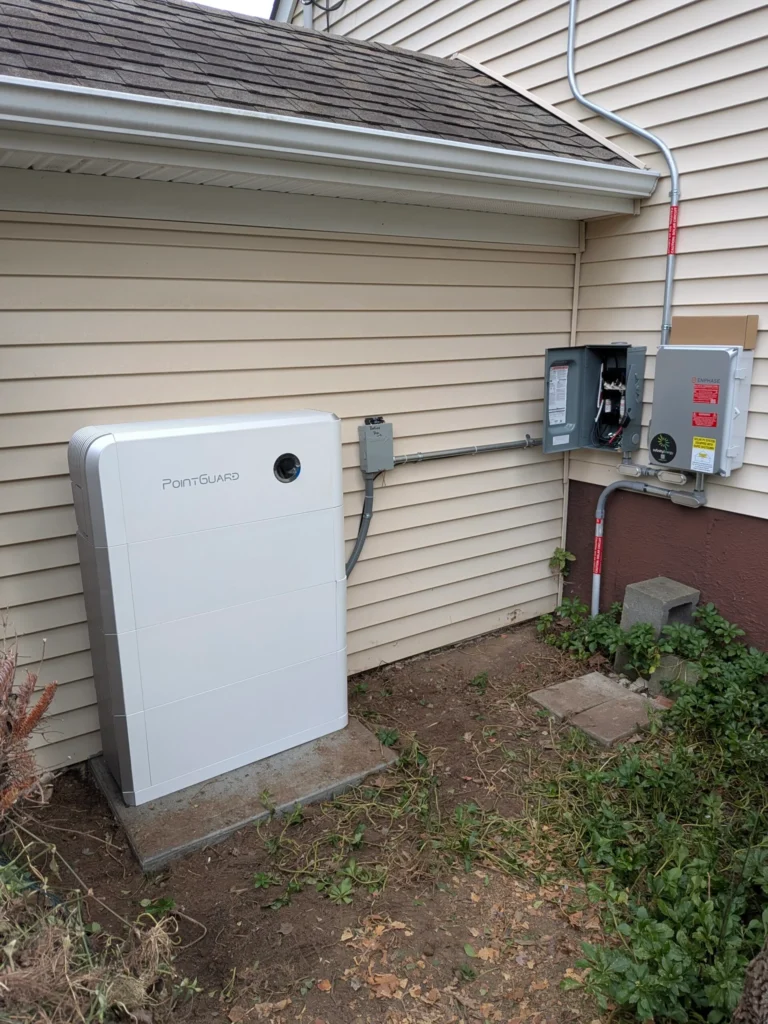
Home Battery
In contrast, home battery systems offer:
Low Operating Costs
Minimal maintenance and no fuel requirements.
Quiet Operation
No noise pollution.
Clean Energy
Zero emissions during operation.
Seamless Integration
Can be paired with solar panels for enhanced efficiency
Bullet Proof Warranties
That range 10-15 years

Fuel Generator
While fuel generators may have lower upfront costs, they entail ongoing expenses such as:
Fuel Costs
Regular refueling, especially during extended outages.
Maintenance
Routine servicing to ensure reliability.
Installation
Costs associated with fuel tank setup, fuel fill-up, and compliance with local codes.
Additional Features Impacting Cost
Load Shedding Capabilities
Load shedding refers to the ability of a system to prioritize and manage energy distribution to essential appliances during power outages. Implementing this feature may require additional components like sub-panels, potentially adding $1,000 to $2,000 to the total cost .
Solar and Time-of-Use (TOU) Integration
Integrating your battery system with solar panels allows for energy storage during peak production times, enhancing self-sufficiency. Additionally, TOU integration enables the system to optimize energy usage based on utility rate schedules. These integrations can increase upfront costs but offer long-term savings and efficiency.
Real-World Example
Consider a homeowner installing a 15 kWh battery system: $1k X 15kw=
Base Cost:
- $15,000 to $22,500 (incuding Tax Credit):
Additional Features:
- Load Shedding: +$1,000 to $2,000.
- Solar Integration: Varies based on system size and complexity.
Over time, this investment can lead to significant savings on energy bills, increased energy independence, and a reduced carbon footprint.